If you’re working in SMT, you’ve probably stared at a roll of stencil wiping paper and wondered: why does some of it fold perfectly, never tear or snag, while other stuff crumbles or leaves lint all over the stencil? As someone who’s been supplying these products for over 10 years, I get that question way more than I expected. Let’s break this down—no super jargon, just the real, practical stuff that matters when you’re on the production floor. SMT Stencil Wiping Paper
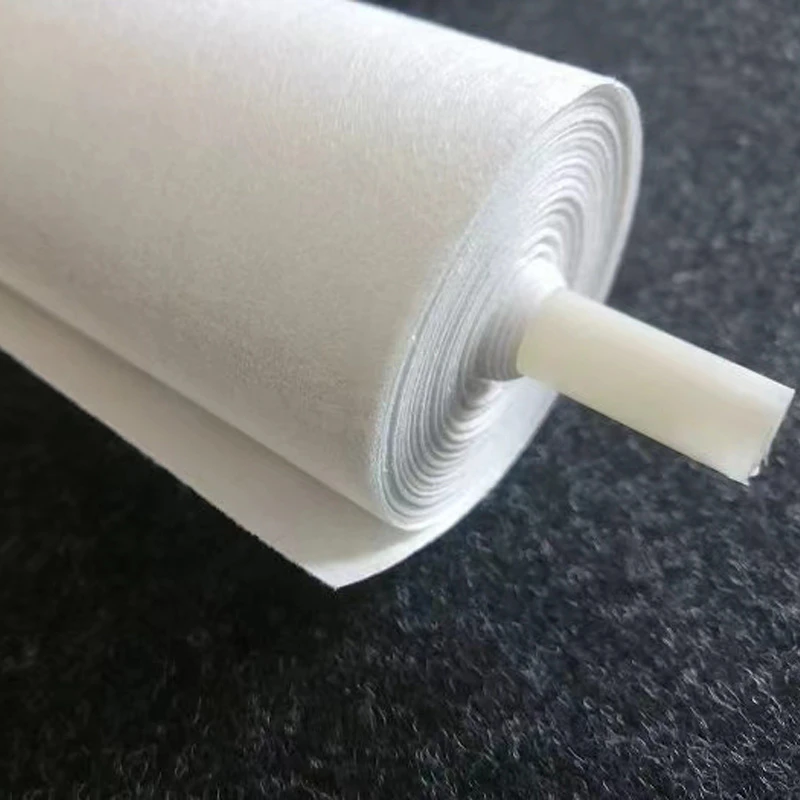
First, let’s start with what foldability even means here. For SMT stencil wiping paper, it’s not just “can I fold it in half without breaking it.” It’s way more specific: can you fold it tightly enough to get into the tiny gaps between a stencil’s apertures, fold it over a few times to pick up solder paste residue without it splitting, and fold it back out to inspect the stencil for leftover paste or lint—all without leaving bits of paper behind, right? Because even a single lint fiber on a stencil can mess up a whole run of boards, leading to cold joints or misaligned components. That’s the part no one tells you: foldability isn’t a convenience—it’s a quality control step that directly impacts your yield.
Now, why do some wiping papers fold great and others don’t? It all comes down to the material, and the processing that turns that material into the finished product. I remember when I first got into this business, we were using a cheaper, lower-grade pulp to cut costs. The paper would fold once, then tear at the crease. We’d get calls from customers saying they had to waste 3-4 wipes per stencil because half would break mid-use. That’s when we learned: it’s not about the thickness of the paper (a lot of people guess that—thicker = better, which is half true, but not the whole story). It’s about the fiber length and how those fibers are bonded together.
SMT wiping paper uses mostly cellulose fibers, right? But high-quality wipes use long-staple cellulose—fibers that are longer than, say, what you’d find in standard printer paper. When you have longer fibers, they interlock way better. Think of it like a basket: shorter strands make a flimsy basket that falls apart when you pull, longer strands weave tight so it stays together. That interlocking is what gives the paper its folding strength. If the fibers are too short, when you fold, the weak points between short strands split, hence the tearing.
Then there’s the bonding process. Some cheap wipes use too much of a synthetic binder to hold the fibers together, which makes the paper stiff, like cardstock. If it’s too stiff, folding it sharply will cause the binder to crack, and you’ll get little paper shards. Too little binder, and the paper is too soft, so when you fold, the fibers slip apart and it tears. The sweet spot is a lightweight binder that lets the paper stay flexible but still holds together when folded. Also, a lot of suppliers use a process called calendering, where they press the paper between heated rollers. This smooths the surface, but if they press too hard, it makes the paper brittle—so folding it causes it to snap instead of crease. We adjusted our calendering years ago; now we heat the rollers just enough to smooth without over-compacting, and that made a huge difference in foldability.
Wait, another thing people miss: moisture content. SMT wiping paper needs a specific amount of moisture to fold well. If it’s too dry, the cellulose fibers are stiff—fold it, and they break instead of bending. If it’s too wet, the paper turns soggy, so when you fold it, it stretches and rips. We test our wipes to a 4-6% moisture level, which is just enough to keep the fibers pliable without making them heavy. Some suppliers skip that control, so you buy a roll that’s either crumbly or soaking wet—bad foldability either way.
Now, let’s tie this to real use cases, because that’s what matters to you. Last year, we had a customer making medical device PCBs—super high-stakes, no defects allowed. Their old wipe had terrible foldability, so they were taking too long to clean the stencil, and sometimes the wipe would leave lint in small apertures, which meant reworking every 10 boards. They switched to our wipes, and they told us their stencil cleaning time dropped by 20% because they didn’t have to waste wipes on tears. They also said fewer reworks, so their yield went up. That’s the real payoff of good foldability: it’s not just less waste of your wiping paper, it’s less waste of your production time and materials.
But foldability isn’t one-size-fits-all, right? Different jobs need different levels. For example, if you’re cleaning a large stencil with big apertures, you might need a sturdier wipe that can handle being folded tightly without tearing. For a fine-pitch stencil (like for 0201 components, where apertures are tiny), you need a wipe that can fold into a thin edge to get into those small spots—too thick, and the fold won’t fit, too flimsy, and it’ll break. That’s why we make different grades: our heavy-duty wipe for large stencils has longer fibers, a touch more thickness, so it folds tight without tearing. Our fine-pitch wipe is a bit thinner, optimized to fold into a sharp edge that can reach those tiny apertures, without lint left behind.
I get why people don’t talk about foldability more—most people just pick a wipe based on price or thickness, not on how it performs when they fold it. But I’ve seen too many production lines slowed down because the wrong wipe had bad foldability. One time, a customer called us in a panic because their line was down for an hour, all because their current wipes would tear when folding to clean a 01005 stencil. By the time we got our sample rolls to them, they’d wasted over a thousand dollars in production time and materials. That’s the story that makes me care about foldability—It’s not a technical spec on a datasheet, it’s what keeps your line running.
Now, let’s clear up some common myths. First myth: thinner wipes have worse foldability. No, not always. Our fine-pitch wipe is thinner than our heavy-duty, but it has longer, tightly bonded fibers, so it folds way better. Second myth: more expensive wipes are always better at foldability. Again, not true. Some budget suppliers buy lower-quality long fibers but charge more, or cut corners on moisture control. You have to look at the specs: fiber length, binder type, moisture content, calendering process. Third myth: foldability only matters for manual stencil wiping. Wrong! Even automated stencil printers use wipes that fold—if the auto-squeezer is pulling a wipe that tears mid-cycle, it’s going to jam the machine, which stops the whole line. We’ve had lots of customers with automated lines switch because their old auto-wipes had bad foldability leading to constant jams.
So, what should you look for when choosing stencil wiping paper for foldability? First, ask the supplier about fiber length—look for long-staple cellulose (10mm or longer is a good baseline). Second, check the moisture content: it should be controlled at 4-6%, not listed as “low” or “high.” Third, if you have fine-pitch stencils, ask for a sample to test foldability: fold it in half twice, then four times, and see if it tears when you unfold it. If you’re testing it, also check for lint: after folding, unfold and see if there are paper fibers left on your fingers—good foldability means tight fiber bonding, so no lint.
As someone who’s in this every day, I can tell you: foldability isn’t just a spec. It’s one of the most important, underrated factors in SMT stencil wiping. Too many suppliers treat wiping paper like a commodity, but it’s a critical part of your process. The right wipe with good foldability doesn’t just save you money on wipes—it saves you time, reduces reworks, and keeps your line running smooth.

If you’re tired of wipes that tear, leave lint, or make your stencil cleaning take longer, we can help. We’ve spent years refining our wipes to get that perfect foldability, tested across all types of stencils and SMT applications. Reach out, and we can walk you through which grade is right for your line, send samples to test, and answer any questions you have about foldability or our products.
Table Top Paper References:
- SMT Industry Technical Journal, 2022, Vol. 35, Issue 4, "Stencil Cleaning Material Performance Metrics for High-Yield SMT Production"
- International Electronics Manufacturing Initiative (iNEMI), 2021, "SMT Stencil Processing Best Practices"
- Manufacturer’s Technical Data for Cellulose-Based Industrial Wiping Materials, 2023, Long-Staple Cellulose Fiber Properties for Flexible Paper Products
Suzhou DDES Electronics Co., Ltd.
As one of the most professional smt stencil wiping paper manufacturers in China, we have world-leading production equipment and strong manufacturing capabilities. Please rest assured to wholesale high quality smt stencil wiping paper at low price from our factory. We also accept customized orders.
Address: No.4, No.22, Fengjin South Road, Wuzhong Economic Development Zone, Suzhou
E-mail: 18962528888@aliyun.com
WebSite: https://www.cleanwipe-chn.com/
