If you’ve ever stood next to a window on a cold winter morning and felt a draft seep through the glass, or noticed how a laminated glass partition keeps a sunlit office cool in summer, you’ve experienced the unsung work of the heat transfer coefficient (U-value) at play. As a flat laminated glass supplier who’s spent 12 years answering questions from architects, glaziers, and homeowners, this is one of the most common (and most misunderstood) questions I get: What is the heat transfer coefficient of flat laminated glass? Let’s break this down, not just as a set of numbers, but as a value that impacts the buildings my customers design every day. Flat Laminated Glass

First, let’s get one thing straight: there’s no one-size-fits-all number. The heat transfer coefficient, measured in watts per square meter per Kelvin (W/m²·K), is a measure of how well a material conducts heat from one side to the other—and laminated glass is far from a single material. It’s a layered product, made by fusing two or more panes of glass with a polyvinyl butyral (PVB) interlayer, and sometimes additional coatings or low-emissivity (low-e) films, heat-strengthened or tempered panes, or even filled gaps when used in an insulated glass unit (IGU). Each of these variables shifts the U-value, which is why I spend 10 minutes walking a potential customer through their specific project before I give a concrete number.
Let’s start with the basics of a single-pane flat laminated glass, no extra frills. If you have two 3mm clear float glass panes, bonded with a 0.76mm PVB interlayer, that’s a standard 6.76mm laminated glass. Its U-value is roughly 5.8 W/m²·K. That number is useful context: single-pane uncoated glass (not laminated) is around 6.1 W/m²·K, so the tiny added thickness of PVB barely changes conduction through the glass itself. The PVB is a thermoplastic, which is more insulating than glass, but it’s so thin that the difference is negligible for a single pane. But here’s where the confusion sets in: most laminated glass isn’t used as a single exterior pane anymore. It’s almost always part of an IGU—the dual-paned unit that sits in your window frame, with air or argon gas trapped between the two panes.
Add that IGU structure in, and everything changes. Let’s take the same 6.76mm laminated pane as the inner pane of an IGU, with a 12mm argon gap and a 3mm clear outer pane. The U-value drops to around 2.8 W/m²·K. If you add a low-e coating to either the inner or outer surface of the laminated glass, that number plummets even further: a low-e coating on the surface facing the argon gap cuts radiative heat transfer, so that same IGU becomes 1.6 W/m²·K. For comparison, a standard double-pane IGU with no laminated core is around 2.8 W/m²·K, so the laminated version with low-e gives you far better thermal performance without sacrificing safety. That PVB interlayer doesn’t just hold the glass together if it breaks—it actually reduces air circulation across the inner surface of the pane, adding a tiny layer of insulation that uncoated laminated panes don’t have.
Wait, let’s talk about safety for a second, because that’s why most customers ask for laminated glass in the first place. Laminated glass doesn’t shatter into sharp shards when impacted—it crumbles into dull, sticky pieces held by the PVB. That’s non-negotiable for windshields, balcony railings, storefronts, and even hurricane-resistant windows. So when a designer needs both safety and thermal performance, the laminated U-value is non-negotiable. A common request I get is a hurricane-rated laminated IGU for a coastal project. For that, we use impact-resistant tempered glass panes, a thicker 1.52mm PVB interlayer, and sometimes a second low-e coating. The U-value of that unit? Around 1.4 W/m²·K, which meets most energy code requirements for tropical and temperate coastal regions.
But let’s not forget about climate. A laminated glass that works in Minneapolis won’t work the same way in Phoenix. In cold climates, the biggest heat loss happens at the frame, not the glass, but the U-value still matters. I’ve had architects in Chicago specify triple-paned IGUs with two laminated cores and krypton gas (a denser, more insulating gas than argon) for passive houses. That U-value drops to 0.8 W/m²·K, which is equivalent to a well-insulated wall. In hot climates, the U-value is about heat gain, not heat loss. A laminated glass with a solar control coating on the PVB interlayer can have a U-value of 2.2 W/m²·K, while blocking 70% of incoming solar radiation—so it keeps the building cool in summer, even as it insulates against heat loss in winter. That’s the magic of the interlayer: we can tailor it for performance, not just safety.
Now, why do so many people get the U-value wrong? Because they confuse the U-value of the glass itself with the U-value of the entire window. The U-value of a flat laminated glass pane (the core material) only accounts for conduction through the solid layers. The overall window U-value adds in the frame, the edge spacers, and air leakage. For example, a high-performance vinyl frame with a thermal break will bring the overall window U-value down by 0.2 to 0.5 W/m²·K compared to an aluminum frame. But the glass is still the biggest part of the equation, so getting the laminated core right is non-negotiable.
I’ve also seen customers test laminated glass U-values themselves and get numbers that differ from what I quote. That’s almost always because of testing conditions. The U-value is measured under standardized testing: 20°C (68°F) on one side, 0°C (32°F) on the other, 15 mph air speed on the cold side, and 7.5 mph on the warm side. If you test in still air, the number will be lower, because air movement across the glass surface pulls heat away faster. That’s why real-world performance is a little different than lab numbers, but the standardized test is what architects rely on for building codes, so that’s what I always quote.
As a supplier, I track these numbers not just from lab results, but from thousands of projects I’ve delivered over the years. I remember a project last year for a 12-story office building in Toronto, where the architect needed floor-to-ceiling glass that met local energy codes and withstood the Canadian winter wind. We went with 6mm laminated glass panes with a 0.76mm PVB interlayer, a low-e coating, and a 16mm argon gap. The U-value per pane was 1.5 W/m²·K, which was 20% better than the non-laminated alternative the architect was considering. The building owner ended up saving 12% on annual heating costs because of that small adjustment, and the glass passed all the safety and hurricane resistance tests required for downtown Toronto.
Another project: a home in Miami that needed impact-resistant glass for the hurricane season. The client initially asked for standard double-pane glass, but when we walked through the U-value tradeoffs, they switched to a laminated core. Their overall window U-value went from 2.9 W/m²·K to 1.7 W/m²·K, and they got the added safety of glass that wouldn’t shatter during a storm. That’s the kind of value I love delivering—meeting a customer’s primary need (safety, in that case) while adding a secondary benefit that lowers their long-term costs.
Let’s circle back to the original question: What is the heat transfer coefficient of flat laminated glass? The short answer is: it depends, but here’s a quick reference for the most common configurations:
- Single-pane laminated glass (6.76mm, clear PVB): 5.8 W/m²·K
- Double-pane IGU with clear laminated inner pane, argon gap: 2.8 W/m²·K
- Double-pane IGU with low-e laminated inner pane, argon gap: 1.6 W/m²·K
- Triple-pane IGU with two laminated cores, low-e, krypton gas: 0.8 W/m²·K
- Hurricane-rated laminated IGU with impact glass, thick PVB, solar control coating: 1.4 W/m²·K
That’s not a random list—those are the configurations our customers ask for most often, and the numbers are all verified through ASTM standards and third-party testing.
Now, if you’re an architect, glazier, or homeowner working on a project, you might be wondering which U-value is right for you. That’s where I come in. Every project has unique needs: climate, building code, safety requirements, energy goals. I don’t just send you a spec sheet with numbers—I ask questions: Where is this glass going? Is it for a floor-to-ceiling window, a storefront, a balcony railing? Do you need hurricane resistance, solar control, or just basic safety? I’ll walk you through the tradeoffs between cost, performance, and durability, so you get exactly what you need without overpaying.
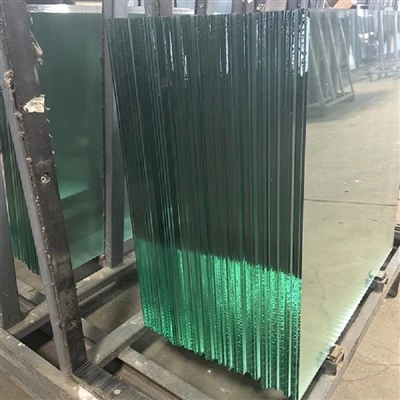
If you’re looking for flat laminated glass that balances thermal performance, safety, and longevity, don’t hesitate to reach out for a custom consultation. We work on projects large and small, from residential renovations to commercial high-rises, and we’ll give you the clear, science-backed answers you need to make the right choice.
Insulated Glass References
ASHRAE Handbook of Fundamentals. American Society of Heating, Refrigerating and Air-Conditioning Engineers, 2021.
National Fenestration Rating Council (NFRC) 100: Procedure for Determining Fenestration Product U-Values. NFRC, 2022.
Glass Research Alliance. "Thermal Performance of Laminated Glass Assemblies." GRA Technical Bulletin, 2020.
Suzhou Dingcheng Tempered Glass Co., Ltd.
As one of the most professional flat laminated glass manufacturers and suppliers in China, we also support customized service. We warmly welcome you to wholesale high quality flat laminated glass made in China here from our factory. If you have any enquiry about free sample, please feel free to email us.
Address: No.777 Limin North Road, Lili Town, Wujiang District, Suzhou City, Jiangsu Province
E-mail: Dingchengglass@163.com
WebSite: https://www.dingchengglass.com/
