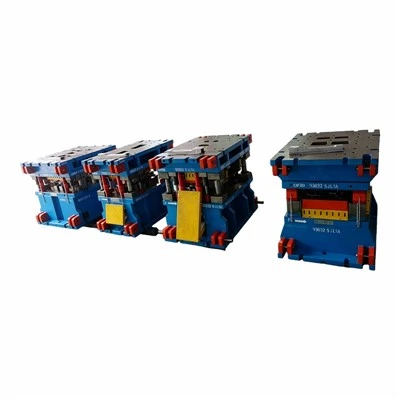
If you’re running a manufacturing or packaging operation, you know that every piece of equipment contributes to your facility’s day-to-day workflow—including the dies you rely on for cutting, creasing, or shaping materials like paper, cardboard, plastics, and thin metal. For years, single stage dies have been the go-to for many small to mid-sized runs, but as workloads scale, gang dies often come up as a more efficient, high-output alternative. One question I hear constantly from operators and production managers is: How noisy are gang dies during use? It’s not just a casual curiosity—noise isn’t just an annoyance on the factory floor; it impacts worker safety, equipment longevity, and even the quality of the parts you’re producing. As a supplier who’s specialized in single stage and gang dies for over a decade, I’ve seen firsthand how noise from die cutting operations varies, and how understanding that difference can make a big difference for your team. Single Stage Dies & Gang Dies
First, let’s ground this in what noise levels actually mean in industrial settings, because not all “loud” noise is the same. The Occupational Safety and Health Administration (OSHA) sets a workplace noise limit of 90 decibels (dB) for an 8-hour shift, with required hearing protection for anyone exposed above that. Even short bursts of noise above 115 dB can cause immediate hearing damage, and consistent exposure to 85 dB or higher leads to permanent hearing loss over time. That’s why measuring die noise matters—not just for comfort, but for compliance and worker health.
Now, single stage dies: These are the smaller, individual dies that cut or shape one part at a time, usually used for low-volume jobs, prototypes, or custom runs. When I first started in this business, I’ll admit I underestimated how quiet single stage dies could be compared to older gang die models. A properly tuned single stage die, cutting lightweight materials like 12pt cardboard or standard paper, typically generates between 75 and 85 dB of noise during use. That’s roughly the volume of a busy office or a vacuum cleaner running in another room—loud enough to be noticeable, but not harmful with unprotected exposure, especially for short runs. But when you crank up the material thickness, like cutting 24pt cardboard or thin plastic, that number jumps: a single stage die working on dense materials can hit 88 to 92 dB, right at OSHA’s 8-hour action limit. The key here is that single stage dies operate one cut at a time, so the force they apply is focused on a small area, which tends to limit the noise output. There’s less simultaneous vibration across multiple parts of the die, which reduces the high-pitched rattling that’s common in gang dies.
Gang dies, on the other hand, are designed to cut multiple parts at once. Instead of one die for a single label, for example, a gang die will have 10, 20, or even 50 small dies arranged in a single plate, all cutting in one pass. That efficiency is why so many high-volume operations switch to gang dies, but that scale brings a tradeoff: noise. When I work with customers upgrading from single stage to gang dies, one of their biggest surprises is the noise difference. A standard gang die, cutting the same 12pt cardboard as that single stage die, typically generates 92 to 98 dB of noise. That’s roughly the volume of a motorcycle passing at 50 feet, which is already above OSHA’s 8-hour limit. Cut thicker materials—like 32pt corrugated board or rigid plastic—and that number climbs to 100 to 105 dB. At that level, even a 15-minute exposure without hearing protection can cause temporary hearing threshold shifts, and repeated long runs mean your team is at high risk for noise-induced hearing loss.
But wait—this isn’t a hard and fast rule. Not all gang dies are equally loud, and there are factors that can make a big difference. The biggest one is the die’s construction. I’ve worked with customers who bought cheap, low-quality gang dies from overseas suppliers, and those were the loudest ones we saw—often hitting 110 dB or more, which is as loud as a power saw. Those dies are usually made with thin, flimsy steel plates that vibrate excessively during the cut, and the individual die blades aren’t properly aligned or secured. A well-built gang die, by contrast, uses thick, precision-machined tool steel, with blades locked tightly into the plate to reduce vibration. Those dies can cut down noise by 5 to 10 dB, bringing them into the 87 to 93 dB range for standard materials, which is a big improvement for worker comfort.
Another factor is the cutting press you’re using. Even the best gang die will be louder if it’s mounted on an old, worn press with loose parts. A properly maintained press with aligned rams, tight bolts, and dampening features will absorb much of the vibration that turns cutting force into noise. I had a customer a few years back who was complaining their gang dies were too loud—they were running a 10-year-old press that had never been serviced. After we replaced their press’s worn ram bushings and added rubber dampeners between the die and the press bed, their noise levels dropped 7 dB without changing the die at all. That’s a simple fix that a lot of operators overlook.
The material being cut is another obvious variable. Soft, flexible materials like fabric or thin vinyl will always produce less noise than rigid, thick materials like corrugated board or thin aluminum. I once had a customer cutting foam padding with a gang die; their noise levels were only 82 dB, even with 20 dies on the plate, because the foam absorbs much of the impact from the blades. But when that same customer switched to cutting rigid cardboard inserts for packaging, the noise jumped to 96 dB. It’s not just the material type, either—its thickness and even its surface texture play a role. Smooth, glossy cardboard cuts with less drag than rough, corrugated, so that small difference can add a few dB to your total noise.
Vibration is the root cause of most die cutting noise, actually. When a blade hits a material, it sends a shockwave through the die plate, the press, and any surrounding structures. That shockwave vibrates at high frequencies, which our brains perceive as loud noise. Single stage dies only have one blade, so that shockwave is isolated to a small area, and there’s less total vibration across the entire die. Gang dies have dozens of blades, all hitting the material at the same time, so the shockwaves add up into a much larger vibration. Add a flimsy die plate or a loose press, and that vibration turns into a loud, high-pitched rattle that echoes around your facility.
This matters for more than just your team’s hearing, too. Excess noise from gang dies is a sign that something’s not working as it should, and it can cause wear on your equipment over time. The constant vibration will loosen bolts in your press, warp your die plates prematurely, and even cause misalignment between the die and the material you’re cutting. I’ve seen customers replace a cheap gang die after only 6 months, because the vibration warped the plate so badly the dies stopped cutting accurately. A quieter, well-built gang die will have less vibration, so it lasts longer, and your press will need fewer repairs.
So what does this mean for you, if you’re deciding between single stage and gang dies, or if you’re already using gang dies and looking to cut down noise? First, don’t just assume all gang dies are equally loud. Work with a supplier who builds their dies with precision-machined steel and proper blade locking mechanisms—those features are the difference between a 98 dB loud die and a 92 dB manageable one. Second, make sure your press is maintained. Tighten all bolts on a regular basis, add dampening pads between the die and the press bed, and service your press’s ram and bushings every 6 months. That small step can cut noise by 5 to 10 dB, which might mean the difference between needing hearing protection on full runs and being able to work near the die without discomfort.
If you’re currently using single stage dies and thinking about scaling up to gang dies, plan for the noise before you make the switch. OSHA’s regulations mean if your gang die runs above 90 dB, you’ll need to provide free hearing protection for all workers in that area, post noise warning signs, and monitor noise levels annually. It’s not a huge burden, but it’s something you’ll want to budget for when you upgrade. Many of my customers tell me the efficiency gains from gang dies far outweigh the minor cost of hearing protection, but it’s better to be prepared than to get a surprise audit from OSHA.
I’ll wrap this up with a story that stuck with me from a customer who switched to a well-built gang die a few years back. They were a small packaging company doing custom boxes, running 100,000 units a month with single stage dies. Their team was complaining of headaches and ringing ears at the end of each shift, and turnover was higher than they wanted. They upgraded to a precision gang die we built, and even though they were cutting thicker corrugated, their noise levels dropped from 95 dB to 91 dB. They added a few sets of earplugs, and within a month, turnover dropped by 40%. That’s not just a numbers game—noise directly impacts your team’s quality of life, and a quieter die isn’t just a nice-to-have; it’s an investment in your people.

If you’re researching single stage or gang dies and want to talk through how noise will impact your specific operation, I’m here to help. We’ve worked with shops of all sizes, from small prototype runs to large production facilities, so we can help you pick the right die for your materials and workflow. Reach out to start a conversation about what will work best for your team.
Metal Stamping Dies References
- Occupational Safety and Health Administration. (2024). Noise Standards: Occupational Noise Exposure. U.S. Department of Labor.
- American National Standards Institute. (2018). Safe Use of Industrial Cutting Dies for Packaging and Converting Operations. ANSI/ASME B110.
- Industrial Noise Control Association. (2023). Noise Reduction in Die Cutting Equipment: A Guide for Facility Managers. INCA Technical Bulletin 412.
- Tool Steel Institute. (2022). Precision Machining of Dies: Impact on Vibration and Noise Emission. TSI Manufacturing Report 78.
Dongguan Changdong Tool & Die Co., Ltd.
With abundant experience, we are one of the most reliable single stage dies & gang dies manufacturers and suppliers in China. Please feel free to buy advanced single stage dies & gang dies made in China here from our factory. Good service and quality products are available.
Address: No. 56-B, Fumin South Road, Dalang Town, Dongguan City, Guangdong Province, China
E-mail: sales@stamping-die.com
WebSite: https://www.metalstampingdie.com/
