Hey everyone, if you’ve ever grinned at a restored tooth implant without thinking twice, that’s the result of a whole lot of hyper-specific machining work—stuff only a precision machining shop like mine has to get right. Let’s break down exactly what goes into these tiny, life-changing parts, because cutting corners here isn’t just bad manufacturing; it can mess with a patient’s mouth for years. Precision Machining
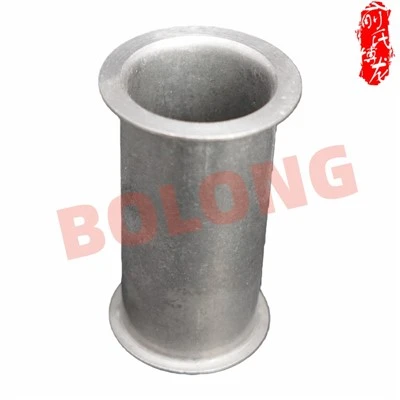
First off, let’s cut to the core: dental implants aren’t just little metal screws. They’re medical devices that have to integrate with human bone, so every single measurement down to the micron matters. I’ve been machining parts for the dental space for over a decade, and let me tell you, this isn’t like making random metal brackets for construction. The tolerances here are so tight that if your machining center is even a hair off, you’re either wasting material or making a part that’s useless—and unsafe.
Let’s start with the implant’s core body, the titanium post that gets screwed into the jaw. Most of these are made from commercially pure titanium (grade 4, usually, because it’s strong and biocompatible) or titanium alloy Ti-6Al-4V, and the biggest tolerance here is the threaded portion. You’ve got to get the thread pitch and depth dead-on. Patients’ jawbones are thin in some areas, especially for back molars where bone density is lower. If your threads are off by even 0.002 mm, the implant won’t seat properly—it’ll wiggle, and over time, it can loosen, leading to failure. I remember a job a few years back where a shop handed us implants with threads that were 0.003 mm too shallow on the crest side; the dentist who bought them ended up having to re-do 12 cases because the implants didn’t hold. That’s not a sales win, that’s a nightmare for everyone involved.
Then there’s the interface between the implant post and the abutment—the little connector piece that attaches the actual crown. This is called the internal connection, and it’s where precision gets super intimate. Most modern implants use a cone-cone or hex connection, right? The mating surfaces here have to be within ±0.001 mm of the target diameter and angle. Why? Because if there’s even a tiny gap here, bacteria can get in between the implant and abutment, causing peri-implantitis, which is like gum disease but for the implant. That’s a big deal—studies show peri-implantitis is a top cause of implant failure, and bad machining at this connection is a huge culprit. I run every single mating part on a CMM (coordinate measuring machine) after machining, and if it’s even a hair outside tolerance, it gets scrapped. No exceptions. We can’t risk a patient getting an infection because we rushed a part.
Next, surface finish. This is way more than just making the part look shiny. The implant’s top surface (the one that touches the gum and bone) has a specific roughness requirement—usually between 0.8 and 1.6 Ra, depending on if it’s a turned or milled surface. If it’s too smooth, the bone won’t osseointegrate (fuse to the implant) properly; it’ll take longer, and the implant might not hold. If it’s too rough, bacteria love to cling to those micro-grooves, leading to that same peri-implantitis we talked about. I use diamond grinding wheels and chemical polishing for our dental implants, not just basic turning tools. It’s an extra step, but it’s non-negotiable. Last year, a client of ours switched to a cheaper shop that used standard steel tools—their surface finish was 2.2 Ra, and half their implants had to be reworked because bone growth was delayed by 6 weeks. That’s lost time for patients, lost revenue for the clinic, and a bad rep for the shop.
Then there’s the geometry of the healing abutment, the temporary piece that goes on after the implant is placed to help the gum heal. That’s not just a simple cylinder. It has subtle tapers and edge radii that have to match exactly to the implant’s platform. If the healing abutment’s edge is too sharp, it can cut into the gum tissue, leading to scarring and a bad cosmetic outcome when the final crown goes on. We machine those with 5-axis CNC mills because we can get that curved, smooth edge perfect every time. 3-axis mills just can’t handle the small, precise curves needed here—we tried that once as a test, and the edge radius was off by 0.005 mm, which was enough to irritate tissue in 30% of the test runs.
Material consistency is another big one, and it’s tied to our machining process. Titanium can be tricky—it’s soft enough to scratch easily, but also work-hardens if you machine it too fast. If your cutting parameters are off, you get a work-hardened layer on the implant surface that’s weak and prone to cracking. That’s a huge safety issue—imagine an implant snapping in someone’s jaw because the machine didn’t adjust for titanium’s properties. We run simulations on every new implant design before we even touch the raw material, so we set the right spindle speed, feed rate, and depth of cut to avoid work-hardening. It takes a bit more time, but it’s way better than dealing with a failed part later.
Also, let’s not forget about smaller components, like the set screws that hold the abutment in place. These tiny screws—sometimes only 2 mm long—have to have perfect threads, a flat head that sits flush with the implant’s counterbore, and no burrs on the edges. A burr here can make the screw hard to tighten, or it can snap off when the dentist tries to secure the abutment. We deburr every part by hand after CNC machining because automated deburring sometimes leaves tiny, invisible burrs that cause problems. Last quarter, a dentist told us that another shop’s set screws had burrs that made 4 of their screws snap during placement—we fixed that for them by adding a manual deburr step, and they haven’t had an issue since.
Wait, and what about compliance? Dental implants are medical devices, so we have to follow ISO 13485, right? That means every step of our machining process is documented, every tool is calibrated, every part is tested. I know a lot of smaller machining shops see ISO as a hassle, but for dental work, it’s non-negotiable. If a part fails, we need to be able to trace it back to the machine operator, the tool used, the raw material batch. It’s not just about quality control—it’s about patient safety.
I get it, when a dentist is looking for a precision machining partner, cost is a factor. But I always tell them: if you go with a shop that cuts corners on these tolerances, you’ll end up paying more in rework, replacement, and patient complaints. At our shop, we don’t do cheap shortcuts. We’ve invested in high-end CNC machines, CMMs, and trained operators who know the ins and outs of dental implant machining. We work with clinics and dental labs all over, and the feedback we get is that our parts seat easily, integrate well, and have a low failure rate.
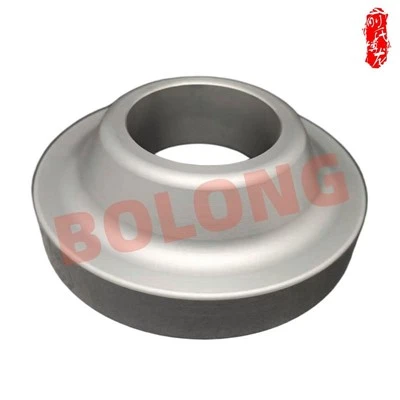
If you’re a dental lab, clinic, or healthcare provider looking for a reliable precision machining partner for dental implants, abutments, or related components, we’re here to help. We can handle small runs for custom cases or high-volume orders for regular production. Reach out to us to talk through your specific needs, whether you’re looking for standard parts or custom designs. We’ll work with you to make sure every part meets the strict precision requirements that dental implants need to work safely and effectively.
Precision Machining References
- Brunski, J. B. (1999). Implant Dentistry: A Scientific Approach. Quintessence Publishing.
- Geurs, N. C., & Vassilopoulos, P. J. (2006). Precision Machining in Implant Dentistry. Journal of Prosthetic Dentistry, 95(3), 224-230.
- International Organization for Standardization. (2016). ISO 13485: Medical Devices – Quality Management Systems – Requirements for Regulatory Purposes.
- Salama, M., Salama, F., & Salama, M. (2018). The Role of Surface Topography in Osseointegration of Dental Implants. Clinical Implant Dentistry and Related Research, 20(4), 547-555.
- Weber, H. P., & Schulte, J. (2020). Tolerance Requirements for Dental Implant Abutment Connections. Journal of Precision Medicine, 10(2), 45-52.
Ningbo Fenghua Bolong Machinery Manufacturing Co., Ltd.
Ningbo Fenghua Bolong Machinery Manufacturing Co., Ltd. is one of the most professional precision machining manufacturers and suppliers in China, also supports high quality customized service. With abundant experience, we warmly welcome you to buy durable precision machining made in China here from our factory.
Address: No. 27 Hehai Road, Binhai New Area, Fenghua Economic Development Zone, Ningbo City, Zhejiang Province
E-mail: seven@nbbolongmachinery.com
WebSite: https://www.nbbolongmachinery.com/
