Hey there, it’s Jake from your go-to PPH fittings supplier, and I get it—you’re probably scrolling through this because standard PPH parts just aren’t cutting it for your project. Maybe you’re working on a small-scale water treatment skid that needs a weirdly sized adapter, or a chemical processing line that needs an unusual end configuration, or even something for a food and beverage setup where you need extra smooth, food-grade PPH. The question you’re Google-ing right now is: “Can PPH fittings be customized?” And let me cut to the chase—yes, we can. But let’s break this down beyond a one-word answer, because there’s a lot that goes into custom PPH parts, and I don’t want you wasting time on assumptions. PPH Fittings

First, let’s back up for a sec for anyone who might not know: PPH stands for Polypropylene Homopolymer, right? It’s that super tough, chemical-resistant plastic we use for everything from plumbing pipes to industrial fluid handling. Standard PPH fittings are the off-the-shelf ones you see on most supply shelves—90-degree elbows, straight couplings, tees, all in fixed sizes. But here’s the thing: no two projects are identical. Maybe your design calls for a 2-inch reducer but with a threaded end on one side and a flanged end on the other, not the plain slip you’d get off the rack. Or maybe you need a custom thickness to withstand higher pressure in a small loop, or a non-standard length because your piping run is just a tiny bit too long for a standard coupling. That’s where customization comes in, and it’s way more accessible than most people think—though there are a few hoops we need to jump through together.
Let me walk you through how this works from a supplier’s perspective, because that’s the stuff no one tells you. When someone reaches out to us for a custom PPH fitting, the first question we ask is: what are your specs? It’s not just “I need a 2-inch elbow”—it’s exact dimensions, pressure rating, chemical compatibility, finish, and even how you plan to install it. For example, if you’re working with corrosive acids, you can’t just use any PPH; you need a medical-grade or industrial-grade homopolymer that’s specifically formulated to resist that acid. If it’s for a drinking water line, we need to make sure it meets FDA standards, which is a non-negotiable. A lot of suppliers will skip that part and just send you a custom part, but that’s how you end up with a part that fails after a few weeks—and that’s on no one but you.
Here’s where customization actually happens: we use injection molding for almost all our custom PPH parts, and that’s the same process we use for standard ones. The difference is, for a custom part, we don’t use a pre-made mold. We build a mold specifically for your design. Now, I know what you’re thinking: “Molds cost a fortune, right?” Let’s be real, for a huge production run, a custom mold is a big investment, but for smaller runs (like 50 to 500 parts, which is super common for most small to mid-sized projects), the cost is totally manageable. And if you’re a repeat customer, we can keep the mold on file for future orders, so you don’t have to pay for it again next time you need the same part. That’s a big win for folks who have ongoing projects, like maintenance teams or engineering firms that tweak designs regularly.
Wait, but can you really make any shape? Let’s be honest—there are limits, and I don’t want to sugarcoat it. PPH is a plastic, so complex, undercut shapes (like a part with a groove on the inside that you can’t pull a mold away from) are hard to do without splitting the mold, which gets pricey fast. We can handle most basic custom shapes: flanged tees, threaded reducers, unique couplings, even parts with special bosses for sensors or valves, which is perfect for automated process lines. If you have a super wild shape, we might suggest alternative materials or a different manufacturing process, but 9 times out of 10, if it’s a standard fluid fitting, we can make it.
Let me throw in a real example to make this concrete. Last quarter, we worked with a small wastewater treatment company that needed custom PPH fittings for their new aeration system. They had a standard 3-inch pipe, but their system required a fitting that connected to a smaller 2.5-inch air compressor line, and the existing adapters on the market had too much pressure drop for their setup. They sent us their CAD drawing, we adjusted the mold to create a gradual taper that cut pressure drop by 15% (we tested it ourselves before delivering), and we made 100 of them for them. They came back a month later and ordered another 200 because the parts worked way better than the standard ones they’d been trying. That’s the kind of customization that makes sense—fixing a specific problem that off-the-shelf parts can’t.
Another thing a lot of people don’t ask about: lead times. Custom parts take longer than standard ones, obviously. Standard PPH fittings ship in 2 to 3 business days, but custom molds and production take 1 to 2 weeks for small runs, sometimes a bit longer if the mold needs tweaks. If you’re in a total crunch, we can rush a mold for an extra fee, but I’d rather be upfront about that than promise you a part in 3 days and miss the deadline. We’ve all been there—waiting for a part that’s critical to a project—and we don’t want to be the reason you fall behind.
Now, let’s talk about cost, because that’s the next big question. Custom PPH fittings aren’t going to be as cheap as standard ones, but they’re not as expensive as you might think. For a 100-part run of a custom adapter, you’re looking at 20 to 30% more per part than a standard one, and the mold cost is usually spread across the run, so the per-part cost goes down the more you order. If you only need 10 parts for a small repair, we can make them too—we have a small extrusion setup for low-volume custom parts that’s perfect for that, so you don’t have to pay for a full mold just for a handful of parts. That’s a game-changer for folks who don’t need a huge order, like homebrewers building a new system or small-scale plumbers with a tricky repair.
Wait, but what about quality? A lot of people worry that custom parts are less reliable than standard ones, especially with PPH. Here’s the thing: our standard parts have been tested for pressure, chemical resistance, and durability, and our custom parts go through the same testing. We test every custom batch for dimensional accuracy first—so it fits your pipes perfectly, no leaks. Then we test pressure ratings, so you know it won’t burst under your system’s pressure. And if you’re using it for a specific chemical, we can do a compatibility test to make sure it doesn’t degrade over time. We’ve had custom parts in systems that have been running for 5+ years with zero issues, so that’s not a risk you have to take.
I should also mention food-grade and medical-grade PPH options, because those are super common for custom projects. A lot of food and beverage plants can’t use standard PPH parts because they might leach chemicals into the product. We carry food-grade PPH that’s FDA-approved, and we can customize parts for those lines too—just let us know upfront, and we’ll make sure the material and finish meet all the requirements. Same goes for medical applications, like equipment that handles sterile fluids—we can adjust the manufacturing process to get a smoother surface that’s easy to clean and resistant to bacteria growth.
Now, let’s address a common myth: “Custom PPH fittings are only for big industrial projects.” No way. We work with everyone—from hobbyists building a rainwater harvesting system in their backyard to engineering firms designing a new chemical plant. Last year, a guy reached out to us who was building a custom homebrewing system and needed a 1.5-inch PPH tee with a smooth inner surface to avoid trapping beer residue. We made it for him in a 50-part run, and he left a review saying it worked way better than the off-the-shelf parts he’d tried. That’s the kind of small, custom job we love.
So, if you’re at the point where you think “standard PPH fittings just won’t work for what I’m doing,” what next? Don’t just guess—reach out to us. Bring your specs, your CAD drawing if you have one, or even just a rough idea of what you need (measurements, what it’s going to be used for, pressure and chemical info). We can walk you through whether it’s feasible, give you a quote, and even mock up a sample (for a small fee, which we’ll apply to your first order) so you can test the part before you commit to a big run. No pressure, no sales pitch—just figuring out what will work for your project.
I get it, choosing a supplier for custom parts can be nerve-wracking. You don’t want to send your specs off somewhere and get a part that’s wrong, or pay a bunch of money for something that doesn’t fit. That’s why we keep the process straightforward: you tell us what you need, we tell you if we can make it, give you a fair price, and send you a sample to check before you order in bulk. We don’t do hidden fees, we don’t use low-quality PPH, and we definitely don’t overpromise lead times.
At the end of the day, the whole point of custom PPH fittings is to solve a problem that standard parts can’t. Whether that’s a weird size, a special end configuration, a specific material for chemicals, or a small run for a one-off project, we can handle it. You don’t have to settle for a fitting that kind of works for your setup—you can get one that fits exactly how you need it, performs exactly how you need it, and doesn’t cause headaches down the line.
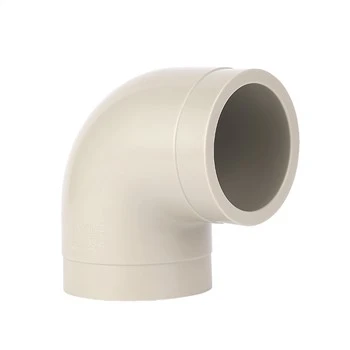
If you’re ready to stop scrolling and turn your custom fitting idea into a real part, just reach out to our team. We’re here to answer questions, walk through specs, and get you a quote fast. No hoops to jump through, no confusing jargon, just actual people who know PPH fittings inside and out. Don’t let a custom design hold your project back—let’s make it work.
PVDF Fittings References
- Polypropylene Homopolymer Properties and Applications, Plastics Industry Association, 2022
- Custom Injection Molding for Industrial Plastics, Society of Manufacturing Engineers, 2021
- Piping Component Compatibility Guide, American Society of Mechanical Engineers, 2023
- Food-Grade Polypropylene Standards, U.S. Food and Drug Administration, 2020
Xiamen Sanideng Plastics Industry Co., Ltd.
Xiamen Sanideng Plastics Industry Co., Ltd. is well-known as one of the leading pph fittings manufacturers and suppliers in China. Please feel free to buy or wholesale high quality pph fittings for sale here from our factory. For price consultation, contact us.
Address: No.169, Tong Hong Road, Tong’an District, Xiamen, China
E-mail: Sandy@sanking.cn
WebSite: https://www.sankingvalve.com/
