If you’ve ever stood in a manufacturing plant, a farm equipment bay, or a fleet maintenance garage, you’ve probably seen a stack of black, flexible hoses tucked away—most likely EPDM hoses. For nearly 15 years, I’ve supplied these hoses to tradespeople, plant managers, and small business owners across the U.S., and the question I get asked more than any other isn’t about size, price, or delivery speed. It’s: “Is EPDM hose resistant to chemicals?” EPDM Hose

At first, this question seemed straightforward. I’d rattle off a list of acids and solvents, nod confidently, and send a sample. But over time, I’ve learned that chemical resistance isn’t a one-size-fits-all trait for EPDM hoses. It’s a nuanced, context-dependent property that makes or breaks whether a hose will hold up for six months or six years, whether a plant will avoid a costly shutdown, or a farmer will skip an emergency callout in the middle of harvest. Let’s break this down, from what EPDM is at a molecular level to how it performs in the real-world chemical environments my customers deal with every day.
First, let’s start with what EPDM even is. EPDM stands for Ethylene Propylene Diene Monomer, a synthetic rubber that’s polymerized from three monomers: ethylene, propylene, and a small amount of diene (usually less than 10% of the total composition). That diene is the key, because it creates a tiny cross-link in the molecular structure that lets the rubber stretch without tearing, bend without cracking, and resist temperature swings better than most other rubbers. Unlike natural rubber, which breaks down when exposed to oxygen or ozone, or neoprene, which is great for oil but stiffens up in cold weather, EPDM has a unique molecular makeup that balances flexibility and durability.
Now, to get to the core question: chemical resistance. This isn’t about “does EPDM resist all chemicals?” It’s about which chemicals it resists well, which it struggles with, and why context matters so much. Let’s start with the good stuff, because that’s why so many of my customers reach out to me instead of going with a cheaper rubber hose.
EPDM hose is highly resistant to polar chemicals, which means chemicals that have a slight electrical charge in their molecules. That includes most dilute acids, bases, and alcohols. For example, in food and beverage processing plants, EPDM hoses are commonly used to transfer dilute citric acid (from fruit processing), phosphoric acid (used in soda production), and even mild sanitizing solutions like hydrogen peroxide or ethyl alcohol. I had a customer last year who ran a craft brewery in Ohio; they were using a cheaper nitrile hose for their wort transfer lines, and after three months, the hose had developed tiny cracks from exposure to dilute sulfuric acid used in their pH adjustment process. They switched to EPDM hose and haven’t had a failure in 18 months. That’s the kind of real-world win that matters.
EPDM also holds up well to hot water and steam, which is a big one for cleaning processes in any industrial or food facility. Most standard EPDM hose can handle continuous temperatures up to 212°F (100°C), and some high-temperature formulations I supply can go up to 300°F (149°C) for short periods. That’s why EPDM is the go-to for hose applications in power plants that need to carry hot boiler blowdown water, or in laundries that transfer hot soapy water between wash cycles. I once worked with a municipal wastewater treatment plant that had been using silicone hoses for their aerobic digester lines—silicone resists some chemicals but breaks down when exposed to the sediment and mild organic acids in the digester. Swapping them for EPDM hoses cut their annual hose replacement cost by 40%.
But here’s where the confusion comes in: EPDM hose does not resist non-polar chemicals very well. Non-polar chemicals, like oils, fuels, and many solvents, have molecules with balanced electrical charges, and they break down the weak cross-links in EPDM’s molecular structure. I learned this the hard way early in my business. A small construction company ordered a batch of 1-inch EPDM hoses to use for fuel transfer on their bulldozers and excavators. Within two weeks, half of those hoses had swollen up like balloons and sprung leaks on the job site. That was a $1,200 lesson: EPDM is not for oil or fuel applications. I now make a point to explain that upfront to any customer looking for hoses for on-road vehicles, farm equipment that transfers diesel, or any application that will come into contact with mineral oils, gasoline, kerosene, or most hydrocarbon solvents. I send them to our neoprene or nitrile hoses instead, which are formulated specifically for those non-polar chemicals.
Another common misconception: the concentration and temperature of the chemical matter just as much as the chemical itself. A dilute solution of hydrochloric acid (less than 10% concentration) will work fine in EPDM hose, but a concentrated 37% hydrochloric acid will eat through EPDM in a matter of hours. And temperature amplifies this effect: a chemical that’s mild at room temperature can be highly corrosive when heated. For example, a 5% sodium hydroxide (lye) solution at 70°F is fine in EPDM, but at 150°F, it will start to degrade the rubber over time. That’s why I always ask customers two follow-up questions when they inquire about chemical resistance: what is the exact chemical you’re transferring, and what’s its concentration and operating temperature? A wrong answer here can lead to a failed hose, a costly shutdown, or even safety hazards.
I also want to touch on a point that’s often overlooked in chemical resistance discussions: exposure time. EPDM hose might not show any signs of damage after a week of exposure to a mild chemical, but over six months or a year, the chemical will slowly break down the rubber’s molecular bonds, leading to brittleness, swelling, or leaks. That’s why using a hose rated for specific chemical exposure is so important—rated hoses are formulated with additional additives (like antioxidant stabilizers, cross-linking agents, and chemical resistance modifiers) that extend their service life in those specific environments. Generic EPDM hose, on the other hand, might seem cheaper upfront, but it will fail much faster when exposed to chemicals, leading to higher long-term costs.
Over the years, I’ve also seen specialized formulations of EPDM hose that push the boundaries of what this rubber can handle. For example, there’s EPDM hose that’s been modified with small amounts of fluorine to improve resistance to some mild solvents, or EPDM hose lined with a thin layer of PTFE (Teflon) for applications that need a balance of EPDM’s flexibility and PTFE’s chemical resistance. These specialized hoses are more expensive, but for customers working in more demanding chemical environments, they’re often the only solution that will last. I supply these modified EPDM hoses to chemical processing plants that transfer mild organic solvents, as well as to battery manufacturing facilities that work with dilute sulfuric acid solutions.
Now, I know what some of you are thinking: “Can’t I just look up EPDM chemical resistance charts online?” Yeah, you can. But here’s the thing: most online charts are generic, and they don’t account for the specific formulation of EPDM hose, the temperature, the concentration, and the exposure time. I’ve seen charts that say EPDM resists acetone, but in reality, acetone will cause some EPDM hoses to swell if exposed for more than a few hours at room temperature. That’s why I always encourage customers to reach out, tell me exactly what they’re working with, and I’ll give them a tailored recommendation. I’ve built my business on that personal touch—instead of just selling a hose, I’m helping customers pick the right one for their specific application.
Let’s circle back to that original question: is EPDM hose resistant to chemicals? The answer is: it depends. It’s highly resistant to polar chemicals like dilute acids, bases, alcohols, hot water, and steam, making it ideal for food and beverage processing, wastewater treatment, power plants, and many industrial cleaning applications. It’s not resistant to non-polar chemicals like oils, fuels, and hydrocarbon solvents, so it’s not the right choice for fuel transfer, automotive cooling systems (wait, side note: automotive cooling system hoses are often EPDM, but they’re formulated with additives to resist ethylene glycol, which is the coolant used in cars. That’s a specific application, not general chemical resistance—another example of how context matters).
If you’re working in an environment where you’re transferring chemicals, you owe it to yourself and your team to pick the right hose. A failed hose isn’t just an inconvenience; it can lead to chemical spills, equipment damage, safety hazards, and costly downtime. I’ve seen a manufacturing plant shut down for three days because a generic hose failed, spilling dilute acid all over the floor—costing them over $50,000 in lost production and cleanup. That’s way more than the difference between a cheap generic hose and a properly rated EPDM hose.
At the end of the day, chemical resistance is one of EPDM hose’s biggest strengths, but it’s not a universal trait. That’s why I take the time to talk to every customer, ask the right questions, and make sure they get a hose that will perform for their specific needs. Whether you’re a small farm needing a hose for their sprayer, a food plant needing lines for sanitizing solutions, or a power plant needing hoses for hot water transfer, I can help you find the right EPDM hose for the job.
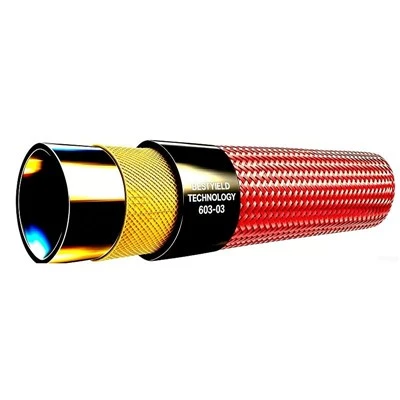
If you’re tired of dealing with hoses that fail prematurely, or you’re not sure if EPDM is the right fit for your chemical application, reach out to me. We can talk through your needs, answer any questions you have, and make sure you get a hose that will last. There’s no cost or obligation—just the kind of honest, practical advice that comes from 15 years of supplying EPDM hoses to customers who need to get the job done right.
Molded Part References
- “EPDM Rubber Properties and Applications.” The Rubber Manufacturer’s Association, 2022.
- “Chemical Resistance of Elastomers.” DuPont Performance Elastomers, 2021.
- “EPDM Hose Design and Performance Specifications.” Society of Automotive Engineers (SAE) International, 2020.
- “Industrial Elastomer Chemical Compatibility Guide.” American Chemistry Council, 2023.
BESTYIELD Technology (Huizhou) Co., Ltd.
BESTYIELD Technology (Huizhou) Co., Ltd. is one of the most professional epdm hose manufacturers and suppliers in China, featured by quality products and good price. Please rest assured to buy durable epdm hose made in China here and get quotation from our factory. Customized orders are welcome.
Address: Yinshan Industrial Zone, Liangjing Town, Huiyang District, Huizhou City, Guangdong Province
E-mail: rick@bestyield.net
WebSite: https://www.bestyield.org/
